
Stories from the open catalog
Guides, releases, and engineering deep dives on governing data and AI with Unity Catalog.

Introducing Full Native Apache Iceberg Support in Unity Catalog 0.7.0
Unity Catalog 0.7.0 can create, write, rename, and drop native Apache Iceberg tables, with no Delta UniForm required. This hands-on walkthrough uses the unitycatalog-playground to drive its Iceberg REST catalog with curl, Apache Spark, and PyIceberg, all under the same governance.
Latest
20 posts

Introducing Full Native Apache Iceberg Support in Unity Catalog 0.7.0
Unity Catalog 0.7.0 can create, write, rename, and drop native Apache Iceberg tables, with no Delta UniForm required. This hands-on walkthrough uses the unitycatalog-playground to drive its Iceberg REST catalog with curl, Apache Spark, and PyIceberg, all under the same governance.

Fighting entropy with metric views
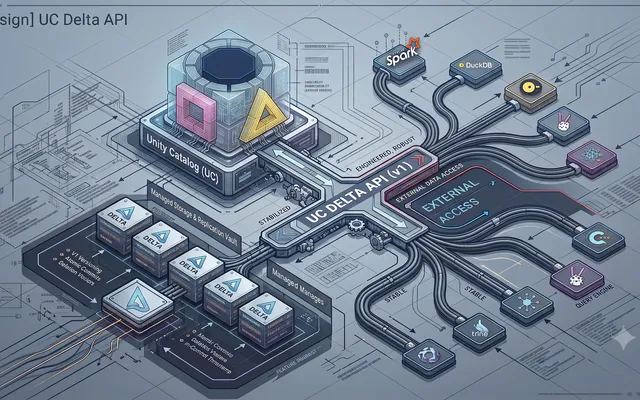
Introducing the UC Delta API
Introducing Unity Catalog Managed Tables
A blog post talking about the new Catalog Managed Tables feature for Unity Catalog and Delta Lake.
Introducing Unity Catalog 0.3.1 Release
A blog for the Unity Catalog 0.3.1 release explaining the key features and enhancements

Building the Medallion Architecture with Unity Catalog
Unity Catalog + Medallion (Bronze/Silver/Gold) gives a clear 3-level structure with fine-grained access, centralized metadata, and lineage.
Avoid Data Silos with Unity Catalog
Data silos split data across tools, creating duplication, inconsistency, and security gaps; Unity Catalog centralizes governance and access so teams share trusted data for analytics and AI.
How to use the Unity Catalog REST API
This article explains how you can use the Unity Catalog REST API to store and manage your data and AI assets.

Working with Functions in Unity Catalog
Learn how to create, manage, and secure reusable functions in Unity Catalog. This guide explains how to store logic in your data catalog for reliable, reproducible code, making it ideal for ML and AI workloads. Explore how to work with functions using the CLI, REST API, and integrate them with popular AI tools like LangChain and LlamaIndex.
Unity Catalog and LlamaIndex
Using Unity Catalog with LlamaIndex helps you organize and use your data with AI. You can build LLM-powered systems while keeping your data safe and easy to manage.
Unity Catalog and OpenAI
This article explains how you can use Unity Catalog with OpenAI to build faster and safer AI workflows.

Unity Catalog: Managed vs External Tables
This article explains the difference between managed and external tables and shows you how to work with both types of tables in Unity Catalog (UC).

Unity Catalog for AI
This article explains how you can use Unity Catalog for AI use cases. Unity Catalog integrates with popular GenAI tools like LangChain, LlamaIndex, OpenAI, Anthropic, and many others to make it easy to manage data, functions, and access control across AI platforms.
Unity Catalog and LangChain
The Unity Catalog AI library is built to integrate Unity Catalog with popular GenAI tools like LangChain, LlamaIndex, OpenAI, Anthropic, and many others to make it easy to manage data, functions, and access control across AI platforms.
Introducing Unity Catalog AI 0.3.0 Release
As part of our continued steadfast commitment to build a robust, flexible, and developer-friendly data catalog platform, we are excited to announce the release of Unity Catalog AI 0.3.0.

Metadata and Data Catalogs
This article explains what metadata is and how it is handled by a data catalog to make your data storage and queries more efficient and secure. The article gives an overview of metadata management and explains why a modern data catalog like Unity Catalog is better than legacy metadata management techniques.

How to use Unity Catalog Volumes
Unity Catalog uses a universal namespace for consistent data access, offers secure access control, and supports both managed and external volumes. It integrates with Spark, MLflow, and other AI tools for seamless data and experiment management.

Authentication and Authorization in Unity Catalog
This article explains authentication and authorization in Unity Catalog, emphasizing their role in secure data governance. It provides a step-by-step guide to configuring Unity Catalog with external identity providers like Google Auth, ensuring centralized identity management, enhanced security, and scalability for modern data pipelines.
Building an ML and AI Data Catalog with Unity Catalog and MLflow
This article guides you through creating an ML and AI data catalog with Unity Catalog and MLflow. It explores the importance of governance in MLOps and LLMOps workflows, offering practical steps for securely managing and scaling machine learning models.
Better Customer-Facing Analytics with Unity Catalog and CelerData
Whether for business-facing martech, real-time dashboards for content creators, or real-time fraud detection, customer-facing analytics has become an ever-increasing priority for businesses everywhere. These use cases demand stringent performance service level agreements (SLAs), such as low latency and high concurrency, and to meet these performance needs, many organizations rely on proprietary data warehouses. This approach can deliver the desired speed and efficiency, but not without introducing a new set of costs and operational challenges. In this article, we’ll examine these unique challenges and explore a path forward toward greater agility and efficiency for customer-facing analytics.
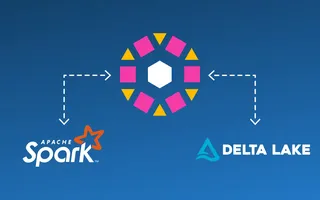
Using Unity Catalog with Apache Spark and Delta Lake
Apache Spark and Delta Lake are leading open source technologies for working with big data in production.
Integrating Apache Spark™ with Unity Catalog Assets via Open APIs
Unity Catalog as the Center of the Open Data Ecosystem
Unity Catalog 0.2 Introduces Models, MLflow and Apache Spark™ Integration, and support for External Identity Providers
Since its launch in July 2024, Unity Catalog has rapidly grown with key features like external authentication, MLflow model support, Apache Spark integration, and a new UI, making it a powerful tool for unified data and AI governance.

What Is a Data Catalog and Why Do I Need One?
A data catalog is a tool for easily and securely managing all your data and AI assets.
Unity Catalog 101
Unity Catalog is a data catalog for managing all your data and AI assets easily and securely. You can use Unity Catalog to organize your data assets, collaborate, manage data access, and ensure compliance with data regulations.
Integrating Unity Catalog with PuppyGraph for Real-time Graph Analysis
At this year’s Data + AI Summit, Databricks made a groundbreaking announcement: the Unity Catalog is now open source. This pioneering catalog, available on GitHub, is the industry’s first to offer governance for data and AI across various clouds, data formats, and platforms
No posts in this topic yet.